


This article provides a comprehensive overview of the upcoming model, rumored to be called "iPhone 16e" or "iPhone SE 4th Generation," covering everything from its general outline to its release date, price, and key specifications. After reading this article, you will clearly understand why it is called "16e," what advancements it offers over the current iPhone SE (3rd Generation), and gain crucial information to aid your purchasing decision. Based on the latest rumors and leaks, we will delve into notable new features to assist you in choosing your iPhone.
▼iPhone 16e (4th Generation) available from "¥92,800~"! Click here for the link▼
What is iPhone 16e (SE 4th Generation)? Overview of the Next Model
Apple's next entry-level model, long anticipated as the "iPhone SE (4th Generation)," was officially announced and released as the "iPhone 16e" on February 28, 2025. This model is not only the latest in the traditional iPhone SE series but also positioned as a more affordable version of the iPhone 16 series, attracting attention as a new concept iPhone.
About the Names iPhone 16e and SE 4th Generation
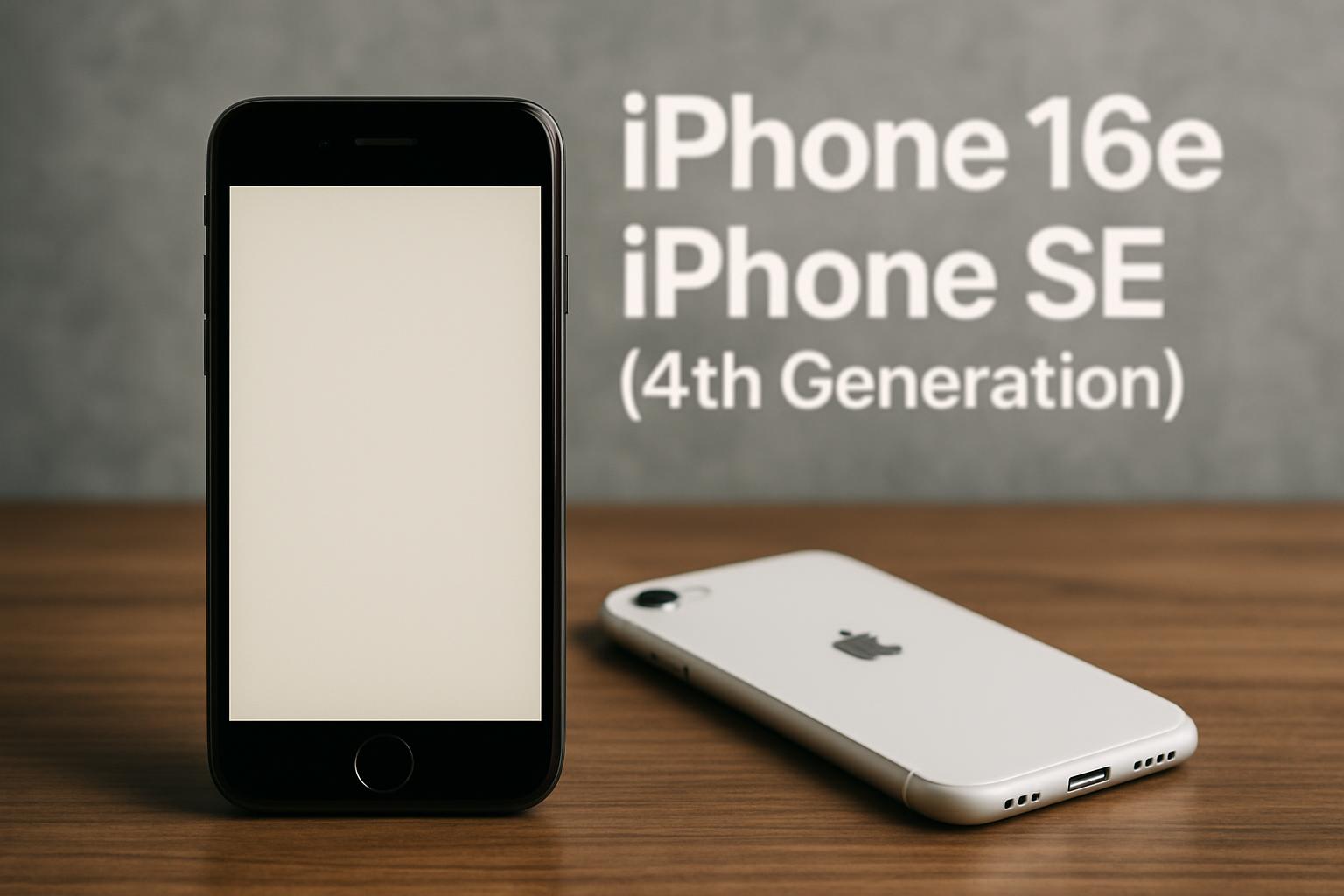
Apple's new entry-level model, widely recognized under the rumored name "iPhone SE (4th Generation)," was actually announced as "iPhone 16e," a model with a different naming convention from the traditional SE series.
The "iPhone 16e" is positioned as the successor to the iPhone SE (3rd Generation), making it the "iPhone SE (4th Generation)." Many media outlets and users frequently use names like "iPhone 16e (iPhone SE 4th Generation)" or "iPhone SE 4" even after its announcement, indicating its lineage from both series. This suggests that the model inherits the "affordable price" strength of the traditional SE series while incorporating technology from the latest numbered iPhone 16 series.
Why is it called "16e"?
Before its announcement, there was much speculation about what the "e" in "iPhone 16e" stood for. For instance, it was widely believed to be the first letter of words like "economy," "entry," "essential," or "efficiency."
However, during Apple's online press conference, when asked about the meaning of "e," a representative reportedly stated that "it is not an abbreviation for anything, but it is made for everyone." According to this official statement, the "e" is not the initial of a specific word but rather a symbol of Apple's intention to deliver the latest iPhone experience to a broader range of users.
Indeed, the "iPhone 16e" features the latest A18 chip and supports Apple Intelligence, offering performance comparable to higher-end models at a more affordable price. Therefore, although "e" is not an official abbreviation, it is practically understood to mean "entry-level model" or "model with excellent cost performance." Furthermore, some speculate that the "16e" naming may signal the beginning of an "e" series, with affordable models released annually.
iPhone 16e (SE 4th Generation) Release Date and Price Predictions
iPhone 16e 2025 Release Date
The highly anticipated iPhone SE (4th Generation) was released on Friday, February 28, 2025, under its new name, "iPhone 16e." The official announcement took place on Wednesday, February 19, 2025, with pre-orders beginning at 10 PM on Friday, February 21 of the same year. Initially, the "iPhone SE (4th Generation)" was widely expected to debut around spring 2025, with some speculation that delays in Apple's modem development might push it to 2026 or later.
However, it was actually launched in February 2025 as the "iPhone 16e." Looking back at past iPhone SE series releases, the 1st generation was in March 2016, the 2nd generation in April 2020, and the 3rd generation in March 2022, generally following a spring announcement and release pattern. The "iPhone 16e" now serves as an affordable version of the iPhone 16 series, in addition to its traditional role as an affordable iPhone SE series.
iPhone 16e (SE 4th Generation) Price Range
The selling price of the "iPhone 16e (SE 4th Generation)" starts from 99,800 yen (including tax) for the 128GB model. This marks a significant price increase compared to previous models, considering its positioning as an affordable version of the iPhone SE series. For reference, the SIM-free model of the iPhone SE (3rd Generation) was priced at 57,800 yen (including tax) for 64GB, 63,800 yen (including tax) for 128GB, and 76,800 yen (including tax) for 256GB at launch. The prices for each storage capacity of the "iPhone 16e" are as follows:
| Storage Capacity | iPhone 16e (SE 4th Generation) Price (tax included) | iPhone SE (3rd Generation) Launch Price (SIM-Free, tax included) |
|---|---|---|
| 128GB | 119,088 yen | 63,800 yen |
| 256GB | 141,120 yen | 76,800 yen |
| 512GB | 180,720 yen | — (Not available) |
▼iPhone 16e (4th Generation) available from "¥92,800~"! Click here for the link▼
Thorough Explanation of iPhone 16e (SE 4th Generation) Key Specifications
The "iPhone 16e" (iPhone SE 4th Generation), expected to arrive in 2025, is predicted to undergo a significant evolution from previous iPhone SE series. In particular, a design refresh, larger display, incorporation of the latest chip, improved camera functions, and enhanced battery performance are drawing considerable attention. Here, we will thoroughly explain its key specifications.
Changes in Design and Display
The iPhone 16e (SE 4th Generation) is widely expected to feature a modern design based on the iPhone 14. This means the traditional home button of the iPhone SE series will be eliminated, transitioning to a full-screen design that allows for a larger screen-to-body ratio. Information suggests the device will be approximately 146.7mm in height, 71.5mm in width, 7.8mm in thickness, and weigh around 167g, making it notably larger than previous SE models. The external port is also almost certain to change from a Lightning port to a USB-C port.
Possibility of OLED Display Adoption
The transition from a traditional Liquid Crystal Display (LCD) to an Organic Light-Emitting Diode (OLED) display is one of the most significant anticipated improvements. This is expected to enable more vibrant color reproduction, higher contrast ratios, and deeper blacks, greatly enhancing the visual experience. The display size is anticipated to be 6.1 inches, with a refresh rate of 60Hz.
Change from Notch to Dynamic Island
With the elimination of the home button, biometric authentication will change from Touch ID (fingerprint authentication) to Face ID (facial recognition). Regarding the shape of the upper part of the display, multiple sources indicate that a notch is highly likely to be adopted, based on the iPhone 14 design. Some information also suggested the inclusion of Dynamic Island, but a notch is currently considered more probable.
Processor and Performance
The iPhone 16e (SE 4th Generation) is expected to be equipped with the same "A18 chip" as the iPhone 16 series, which will lead to a significant improvement in processing performance. Additionally, the RAM (memory) capacity is expected to be increased to 8GB, enhancing comfort when using multiple applications simultaneously. This combination of the high-performance A18 chip and 8GB RAM is also expected to support Apple Intelligence, Apple's latest AI feature.
Evolution of Camera Features
Camera features will also see significant advancements. The iPhone 16e (SE 4th Generation) is still expected to feature a single camera (wide-angle camera), but it is anticipated to adopt a 48-megapixel image sensor. This implies that it will be capable of high-quality photography equivalent to the iPhone 16, based on the iPhone 14's camera performance. However, ultra-wide and telephoto cameras are likely to be absent. The front camera is expected to be a 12-megapixel TrueDepth camera, offering performance nearly identical to the iPhone 16, though it might not support portrait mode's focus features or cinematic mode. Enhanced software processing, such as Night mode and Deep Fusion, is also expected, leading to improved photo quality.
Battery Performance and Charging Speed
Battery performance is predicted to feature a large-capacity 3,279mAh battery, an increase of approximately 60% compared to the iPhone SE (3rd Generation). This capacity is equivalent to that of the iPhone 14, and some information suggests it will allow for up to 26 hours of video playback and up to 90 hours of audio playback. Regarding charging speed, it will support 20W fast wired charging, capable of charging up to 50% in 30 minutes. Additionally, there is a possibility of MagSafe-compatible wireless charging, which would allow for 15W charging. However, some reports suggest MagSafe might not be supported, so an official announcement is awaited.
Storage Capacity and Color Variations
Storage capacity is highly likely to include three options: 128GB, 256GB, and 512GB. The traditional 64GB model will be discontinued, making larger capacities standard, allowing users to confidently store photos, videos, apps, and more. For color variations, black and white are considered the most likely two options. Other choices like Starlight, Midnight, and Red have also been rumored, but the iPhone 16e (SE 4th Generation) will likely feature simple and refined colors.
| Item | iPhone 16e (SE 4th Generation) Predicted Specifications | Remarks |
|---|---|---|
| Design Base | iPhone 14-based full-screen design | Home button removed, Face ID adopted |
| Display | 6.1-inch OLED display | 60Hz refresh rate |
| Notch/Dynamic Island | Notch highly likely | Dynamic Island also suggested, but information varies |
| Processor | A18 Chip | Equivalent to iPhone 16 series |
| RAM | 8GB | Requirement for Apple Intelligence |
| Rear Camera | 48MP wide-angle (single camera) | High image quality equivalent to iPhone 16, no ultra-wide or telephoto |
| Front Camera | 12MP TrueDepth camera | Portrait mode focus and cinematic mode possibly unsupported |
| Battery Capacity | 3,279mAh | Approx. 60% increase from iPhone SE (3rd Generation) |
| Wired Charging | 20W fast charging (USB-C) | Up to 50% charged in 30 minutes |
| Wireless Charging | Possible MagSafe compatible 15W wireless charging | Some information suggests no MagSafe |
| Storage Capacity | 128GB / 256GB / 512GB | 64GB model likely discontinued |
| Color Variations | Black, White | Other rumors include Starlight, Midnight, Red |
| AI Features | Apple Intelligence compatible | Enabled by A18 chip and 8GB RAM |
Comparison with the Current iPhone SE (3rd Generation)
As the arrival of the "iPhone 16e (SE 4th Generation)" approaches, the differences from the current iPhone SE (3rd Generation) will be the most anticipated point for many users. Here, we will thoroughly compare both models from various perspectives such as design, performance, and price, to reveal the full scope of its evolution.
Differences in Design and Size
The current iPhone SE (3rd Generation) retains the traditional design based on the iPhone 8, released in 2017. It features a physical home button and thick top and bottom bezels, with a compact 4.7-inch Retina HD display (LCD) designed for easy one-handed operation. Touch ID (fingerprint authentication) is used for biometric security. With dimensions of 138.4mm (height), 67.3mm (width), 7.3mm (thickness), and a weight of 144g, its palm-friendly size is a major appeal.
On the other hand, the "iPhone 16e (SE 4th Generation)" is expected to feature a redesigned look based on the iPhone 14, likely eliminating the home button and adopting a more modern full-screen display. The display size will increase to a 6.1-inch Organic Light-Emitting Diode (OLED) display, and thinner bezels will provide a larger viewing area. Biometric authentication will shift to Face ID (facial recognition), and there are speculations that the top of the screen will feature a notch or a Dynamic Island, as seen in the latest iPhone series. This will make the device noticeably larger than the iPhone SE (3rd Generation), giving it a more contemporary appearance.
| Item | iPhone SE (3rd Generation) | iPhone 16e (SE 4th Generation) (Expected) |
|---|---|---|
| Design Base | iPhone 8 | iPhone 14 |
| Display Size | 4.7 inches | 6.1 inches |
| Display Technology | Retina HD Display (LCD) | OLED Display |
| Biometric Authentication | Touch ID (fingerprint) | Face ID (facial) |
| Home Button | Yes | No |
| Notch/Dynamic Island | None (top/bottom bezels) | Yes (notch or Dynamic Island) |
| Dimensions (H x W x T) | Approx. 138.4mm × 67.3mm × 7.3mm | Unannounced (expected similar to iPhone 14) |
| Weight | Approx. 144g | Unannounced (expected similar to iPhone 14) |
Performance and Feature Comparison
In terms of performance, the iPhone SE (3rd Generation) features the A15 Bionic chip, the same as the iPhone 13 series, and supports 5G connectivity. Despite its compact body, it offers high processing power, ensuring smooth operation for everyday use and gaming. The camera is a 12MP wide-angle single camera, supporting features like Smart HDR 4. The battery can last up to 15 hours for video playback. Storage options include 64GB, 128GB, and 256GB.
The "iPhone 16e (SE 4th Generation)" is expected to bring further performance improvements. The processor is likely to be the A18 Bionic chip, which is also anticipated for the iPhone 16 series. This will significantly boost processing speed, graphics performance, and AI processing capabilities, making it compatible with more advanced applications, games, and the latest AI features like Apple Intelligence. RAM is also rumored to be increased to 8GB, improving multitasking performance.
Camera features are also evolving, with a 48MP single rear camera expected. This will enable more detailed photo capture, and advanced software processing such as Night mode and Deep Fusion will be enhanced. Battery capacity is expected to increase to around 3,279mAh, equivalent to the iPhone 14, promising longer battery life. The charging port is almost certainly changing from Lightning to the more versatile USB-C, which is expected to improve data transfer and charging speeds. Storage capacity is likely to start from 128GB, with the 64GB model being discontinued. Additionally, there's a possibility of the "Action Button," introduced with the iPhone 15 Pro series, being included, further enhancing the user experience.
| Item | iPhone SE (3rd Generation) | iPhone 16e (SE 4th Generation) (Expected) |
|---|---|---|
| Processor | A15 Bionic chip | A18 Bionic chip |
| RAM | 4GB | 6GB or 8GB |
| Rear Camera | 12MP Wide (single) | 48MP Wide (single) |
| Front Camera | 7MP | Improved quality (expected) |
| Battery Life (Video Playback) | Up to 15 hours | Extended (expected around 3,279mAh) |
| Storage Capacity | 64GB, 128GB, 256GB | 128GB, 256GB, 512GB (expected) |
| Charging Port | Lightning | USB-C |
| 5G Support | Supported | Supported (possibility of Apple's own modem) |
| Apple Intelligence | Not supported | Supported (expected) |
| Action Button | No | Possible inclusion |
Price and Cost-Performance Differences
The iPhone SE (3rd Generation) was initially offered at the most affordable price point within the iPhone series, starting from 57,800 yen (including tax) for the 64GB model. It continues to be popular as a model with excellent cost performance, balancing power and price. Especially for users who prefer the home button and a compact size, it remains an attractive option.
The "iPhone 16e (SE 4th Generation)" is expected to see a significant spec upgrade, including a larger display, transition to OLED, adoption of Face ID, and a new processor, so its price is likely to be higher than the iPhone SE (3rd Generation). Predicted prices range from 70,000 to 80,000 yen, or even 60,000 to 90,000 yen, with the possibility of further price increases in Japan. However, considering its advancements, it will still offer excellent cost performance compared to flagship models. For users who want to experience the latest iPhone at an affordable price, it should be a very attractive option.
Is the iPhone 16e (SE 4th Generation) a good buy? Key points to consider before purchasing
The iPhone 16e (SE 4th Generation), with its anticipated significant advancements, will likely be an attractive option for many users. However, before making a purchase decision, it's crucial to align it with your usage patterns and expectations. Here, we'll explain who this phone is recommended for and what you should check before buying.
Recommended User Base
The iPhone 16e (SE 4th Generation) is recommended for a wide range of users who prioritize a balance of price and performance.
-
Users considering upgrading from an older iPhone:
Especially for users migrating from iPhone 8 or earlier models, or iPhone SE (1st and 2nd generation) with Touch ID, the iPhone 14-based design, 6.1-inch OLED display, and Face ID will be significant upgrades. It's ideal for those who want to comfortably use the latest iOS and enjoy photos, videos, and games on a larger, more vivid screen.
-
Users who want the latest iPhone on a budget:
The iPhone 16e (SE 4th Generation) is likely to feature the A18 Bionic chip, similar to the iPhone 16 series, meaning it's expected to offer high processing performance close to flagship models at a more affordable price. This will ensure smooth operation for daily use, high-load apps, and games.
-
Users looking for an iPhone that is neither too compact nor too large:
While previous iPhone SE models were small at 4.7 inches, the iPhone 16e (SE 4th Generation) is expected to feature a 6.1-inch display. This size is comparable to the iPhone 14, making it suitable for users who prefer a balanced size for one-handed operation and visibility.
-
Users expecting improved camera performance:
Although it will have a single rear camera, it is rumored to feature a 48MP main lens similar to the iPhone 15, which is a significant upgrade in image quality from the current 12MP iPhone SE (3rd Generation). Advanced shooting features like Night mode and Portrait mode are also expected, making it ideal for users who enjoy photography.
-
Users interested in Apple Intelligence (AI features):
With the A18 chip and 8GB RAM, the iPhone 16e (SE 4th Generation) is highly likely to support Apple Intelligence. This could make it the most affordable iPhone to experience the latest AI features, such as enhanced Siri, image generation options, and notification summaries.
Points to Check Before Purchasing
When considering the purchase of an iPhone 16e (SE 4th Generation), it's important to check the following points in advance and carefully determine if it meets your needs.
| Check Point | Details |
|---|---|
| Current Device and Need for Upgrade |
Assess how satisfied you are with your current iPhone or smartphone for your usage. If you are perfectly happy with your current iPhone SE (3rd Generation) and don't need a significant performance boost or design change, then there might be no rush to upgrade. However, if you are upgrading from an older model, the benefits will be substantial. |
| Budget and Acceptable Price Range |
The iPhone 16e (SE 4th Generation) is expected to be more expensive than the current model. Given the increased costs associated with new features like the OLED display and Face ID, plus the impact of the depreciating yen, prices are predicted to range from 70,000 to 90,000 yen. Consider if it fits within your budget, including carrier discounts and trade-in programs. |
| Design and Biometric Authentication Preference |
The iPhone 16e (SE 4th Generation) is expected to ditch the home button and transition to Face ID (facial recognition). Users accustomed to Touch ID (fingerprint authentication) might need to adjust to the change in operation. Also, since it will be based on the iPhone 14 design, it's important to check the latest leaks regarding the presence of a notch or the possibility of Dynamic Island. |
| Storage Capacity Selection |
While the iPhone 16e (SE 4th Generation) is expected to offer 128GB, 256GB, and 512GB storage options, similar to the current model, there's also a possibility that the minimum storage capacity will be 128GB. If you store many photos and videos or use many apps, it's advisable to choose a larger capacity for future needs. |
| Presence of Action Button |
Some rumors suggested the inclusion of an Action Button, but the latest leaks indicate that the iPhone 16e (SE 4th Generation) is unlikely to feature one. Those who were looking forward to the convenience of the Action Button should take this into consideration. |
| Importance of Awaiting Official Announcement |
The information presented in this article is based solely on current predictions and rumors. The actual release date, price, detailed specifications, and features may change with Apple's official announcement. To avoid regret, it is highly recommended to wait for the official announcement before making your final decision. |
▼iPhone 16e (4th Generation) available from "¥92,800~"! Click here for the link▼
Summary
The "iPhone 16e (SE 4th Generation)" is garnering attention as the next-generation affordable iPhone expected around 2025. It is predicted to break away from the traditional home button design, adopting a full-screen design similar to the iPhone 14/15 series, an OLED display, and Dynamic Island, offering a more modern user experience. Compared to the current iPhone SE (3rd Generation), the price is expected to increase, but for users who want to get a high-performance chip and advanced camera features at a more affordable price than the latest iPhone series, it will be a very attractive option.
▼iPhone 16e (4th Generation) available from "¥92,800~"! Click here for the link▼


