In 2025, can the "iPhone SE2 2nd generation" still "hold its own"? This article concludes that it "can still hold its own sufficiently." The processing power of the A13 Bionic chip is more than enough for daily use, and the convenience of Touch ID and its compact size are unique attractions. By reading this article, you can comprehensively understand all the information needed to consider purchasing the iPhone SE2 2nd generation, including its latest evaluation, key specifications, pros and cons, and who it is recommended for. It also explains how to wisely choose one from the used market.
▼Click here for a list of iPhone SE2 (2nd generation) products▼
https://prodig-shop.com/collections/iphone-se2
Conclusion: Can the iPhone SE2 2nd Generation still hold its own?
The iPhone SE (2nd generation), released in April 2020, is still an iPhone that can "hold its own and is fully capable" for many users in 2025, five years after its release. Its high cost-performance, compact size, and the convenience of Touch ID via the home button are particularly valued as unique features not found in the latest iPhones.
However, it lags behind the latest models in terms of battery life, camera performance, and lack of 5G support. Therefore, its evaluation will vary depending on the user's purpose and what they prioritize.
Latest Evaluation in 2025: The Position of the iPhone SE2 2nd Generation
In 2025, the iPhone SE (2nd generation) holds the position of being a "cost-effective and practical option" that maintains extremely high popularity in the used market.
The iPhone SE (2nd generation) topped sales rankings in 2023 and 2025 in the used smartphone market, indicating its high demand. This is because, with new iPhones becoming increasingly expensive, it serves as an optimal choice for users who want to access the iOS ecosystem at an affordable price.
OS Update and Repair Support Status
As of 2025, the iPhone SE (2nd generation) supports the latest iOS version, iOS 17.2, and is included in the list of devices eligible for the iOS 18 update announced in 2025. This means that users can confidently continue using it for the foreseeable future in terms of security and access to new features.
Regarding Apple's repair support, it is typically available for five years after sales end. Since the iPhone SE (2nd generation) sales ended in March 2022, it is expected to remain eligible for repair support until around March 2027.
Strengths and Weaknesses Compared to Current Models
Although time has passed since its release, the iPhone SE (2nd generation) is equipped with the A13 Bionic chip and possesses sufficient processing power to operate smoothly for many uses, including light gaming. Furthermore, features such as Touch ID (fingerprint authentication), its compact size, IP67 water and dust resistance, and FeliCa support (Apple Pay) offer high practicality even in 2025. In particular, Touch ID, which allows for smooth unlocking even when wearing a mask, is a significant advantage not found in the latest Face ID-equipped models.
On the other hand, compared to the latest iPhones, the following points are weaknesses:
| Item | iPhone SE (2nd Gen) Evaluation | Comparison with Latest Models |
|---|---|---|
| 5G Communication | Not supported | Latest models mostly support 5G, enabling high-speed communication in 5G areas. |
| Battery Life | Often feels insufficient | Latest models have increased battery capacity, significantly improving operating time. |
| Camera Performance | Single camera, no ultra-wide or telephoto | Latest models have multiple lenses, enabling diverse photography with ultra-wide, telephoto, night mode, etc. |
| Display | 4.7-inch Retina display | Latest models are larger and higher resolution, with many adopting OLED displays. |
Considering these points, for those with clear needs such as "wanting to save costs," "liking a compact iPhone," or "Touch ID is essential," the iPhone SE (2nd generation) remains a highly attractive option and can certainly "hold its own" even in 2025. However, users seeking the latest communication speeds, camera performance, and long battery life might find it insufficient.
Revisiting the iPhone SE2 2nd Generation: Key Specifications and Features
The iPhone SE (2nd generation), released on April 24, 2020, continues to be supported by many users today due to its high cost-performance. It adopted the iPhone 8's design, incorporated the then-latest A13 Bionic chip, and packed high processing power into a compact body, drawing significant attention. Here, we will thoroughly review the key specifications and features of the iPhone SE (2nd generation).
Processing Performance: Evaluation of the A13 Bionic Chip
One of the biggest attractions of the iPhone SE (2nd generation) is its core, the A13 Bionic chip. At the time of its release, this chip was also used in the iPhone 11 series, boasting processing performance equivalent to high-end models. The A13 Bionic consists of a 6-core CPU with two high-performance cores and four high-efficiency cores, a 4-core GPU, and an 8-core Neural Engine, totaling 8.5 billion transistors.
Compared to the previous generation A12 Bionic chip, the CPU cores are up to 20% faster, and power consumption is reduced by up to 30%. Additionally, the GPU cores are up to 20% faster, with power consumption reduced by up to 40%, demonstrating significant advancements in both processing speed and power efficiency. This provides the performance to smoothly handle demanding tasks such as heavy 3D games and video editing, and even in 2025, it still has sufficient capability to comfortably use many games and apps.
The A13 Bionic chip is a crucial element supporting the long lifespan of the iPhone SE (2nd generation), and by continuing to support the latest iOS updates, it provides a foundation for reliable long-term use.
Camera Performance: Is It Sufficient for Everyday Use?
The iPhone SE (2nd generation) camera features a 12MP wide-angle single camera on the back and a 7MP TrueDepth camera on the front. While the camera module itself is the same as the iPhone 8, significant performance improvements have been made through software thanks to the A13 Bionic chip's advanced image processing capabilities.
Key camera features include support for "Smart HDR (2nd generation)," which suppresses overexposure and underexposure in high-contrast scenes, capturing clear photos with rich detail. Despite being a single camera, it also supports "Portrait mode," allowing users to take photos with naturally blurred backgrounds for people. However, Portrait mode only applies to people and does not support pets or objects.
For video recording, it supports 4K video recording (up to 60fps) and includes optical image stabilization, allowing you to preserve everyday memories in high-quality video. While it lacks features found in the latest iPhones such as an ultra-wide camera, telephoto camera, or Night mode, it can be said to have sufficient performance for daily use as a "competent camera for everyday life."
Battery Life and Charging Speed
The iPhone SE (2nd generation) has a battery capacity of 1,821mAh, which is equivalent to the iPhone 8. Since its release, there have been some complaints about its "mediocre" battery life, but this varies greatly depending on usage. According to Apple's official information, the battery life is stated to be up to 13 hours for video playback and up to 40 hours for audio playback.
Regarding charging, it supports both fast charging and wireless charging (Qi-compatible). The included charger is 5W, but by using a separately sold 18W or higher USB-C power adapter and a USB-C to Lightning cable, it is possible to achieve up to 50% fast charging in approximately 30 minutes. This allows for quick battery recovery, compensating for concerns about battery life. If long hours of use are expected, combining it with a mobile battery is also an effective option.
Design and Size: Is Compactness an Advantage?
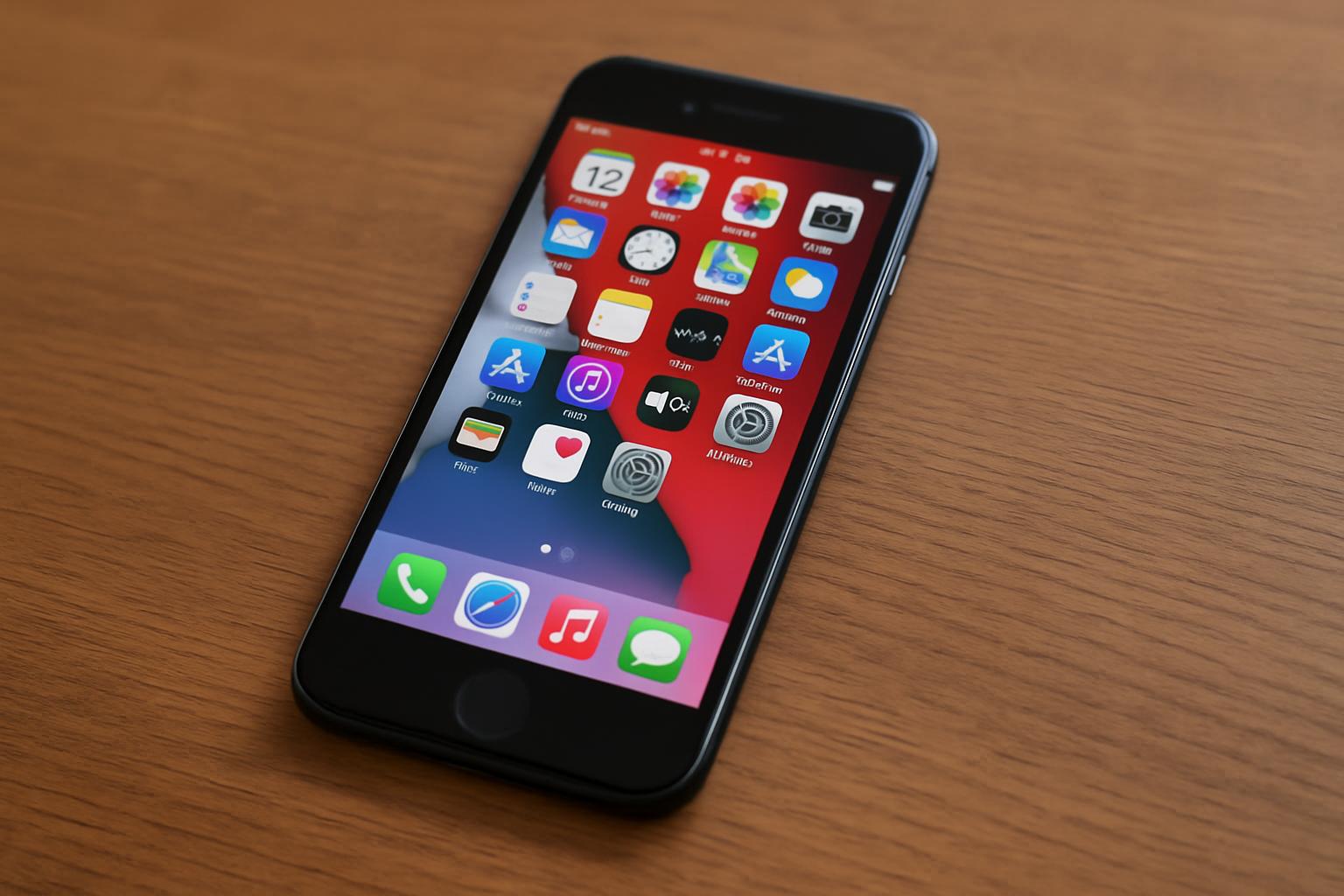
The design of the iPhone SE (2nd generation) is almost identical to the iPhone 8, making it familiar to many iPhone users. It features a 4.7-inch Retina HD display and has dimensions of 138.4mm in height, 67.3mm in width, 7.3mm in thickness, and weighs 148g, making it very compact compared to the larger smartphones of recent years.
This compactness offers significant advantages, such as easy one-handed operation and fitting comfortably in a pocket. The back is made of glass, giving it a premium feel, and it comes in three color options: Black, White, and (PRODUCT)RED. The thick bezels at the top and bottom and the presence of a home button differentiate its design from the latest full-screen iPhones, but it maintains persistent popularity as "the most iPhone-like design."
| Item | iPhone SE (2nd Generation) Main Specifications |
|---|---|
| Display | 4.7-inch Retina HD display (LCD with IPS technology) |
| Resolution | 1,334 x 750 pixels, 326ppi |
| Chip | A13 Bionic chip (6-core CPU, 4-core GPU, 8-core Neural Engine) |
| Rear Camera | 12MP wide camera (ƒ/1.8 aperture), optical image stabilization, Portrait mode, Smart HDR (2nd generation) |
| Front Camera | 7MP camera (ƒ/2.2 aperture) |
| Video Recording | 4K video recording (up to 60fps), optical video image stabilization |
| Battery Capacity | 1,821mAh |
| Charging | Fast charging compatible (up to 50% in approx. 30 minutes with 18W+ adapter), Qi wireless charging compatible |
| Biometric Authentication | Touch ID (fingerprint authentication) |
| Size | Height 138.4mm × Width 67.3mm × Thickness 7.3mm |
| Weight | 148g |
| Color | Black, White, (PRODUCT)RED |
| Storage | 64GB, 128GB, 256GB |
| SIM | Dual SIM (nano-SIM and eSIM) compatible |
| Water & Dust Resistance | IP67 rating (maximum depth of 1 meter for up to 30 minutes) |
Touch ID Fingerprint Authentication Convenience
The iPhone SE (2nd generation) features Touch ID (fingerprint authentication) integrated into its home button. Unlike Face ID (facial recognition), which is dominant in current iPhones, fingerprint authentication offers unique convenience. Especially, it allows for smooth unlocking and Apple Pay transactions even when wearing a mask, which is a significant advantage.
Touch ID is characterized by its high accuracy and fast authentication speed, making screen transitions after unlocking very smooth. Furthermore, it can be used in various situations requiring security, such as app purchases and password entry, making its convenience very high.
▼Click here for a list of iPhone SE2 (2nd generation) products▼
https://prodig-shop.com/collections/iphone-se2
Pros and Cons of the iPhone SE2 2nd Generation
Pros: Cost Performance and Ease of Use
The iPhone SE2 2nd generation's greatest appeal lies in its excellent cost performance and familiar ease of use for many users.
Firstly, in terms of cost performance, it is available for around 20,000 yen in the used market, making it very attractive for those looking to get an iPhone at an affordable price. Even at its launch, it was priced under 50,000 yen, yet it featured the same A13 Bionic chip as the then-top-tier iPhone 11 series, meaning its processing performance still offers sufficient comfort for daily use in 2025. Furthermore, it includes essential modern smartphone features such as IP67 water and dust resistance, FeliCa (Apple Pay) support, and wireless charging, offering an excellent balance between price and practicality.
Secondly, regarding ease of use, it features a compact 4.7-inch display and a lightweight body of approximately 148g. This makes one-handed operation easy and allows it to fit smoothly into a pocket. The inclusion of a physical home button and Touch ID (fingerprint authentication) receives high praise, especially for those not accustomed to Face ID (facial recognition), as it allows stress-free unlocking and payments even while wearing a mask. Additionally, it supports dual SIM with a physical SIM and an eSIM, contributing to separating private and business use, and saving on communication costs.
Cons: No 5G Support and Battery Life
On the other hand, the iPhone SE2 2nd generation also has several drawbacks. It is important to understand these before considering a purchase.
One of the biggest disadvantages is its lack of 5G connectivity. 5G is the next-generation communication standard enabling high-speed, large-capacity communication, and with its expanding coverage, there's a possibility that users may find the communication speed insufficient in the future. This point should be particularly considered by users who frequently stream video content or download large files.
Next, battery life is also a concern. The iPhone SE2 2nd generation has a battery capacity of 1,820mAh, which is smaller compared to recent iPhones with larger displays. Consequently, during high-load usage like video viewing or gaming, the battery drains quickly, and it's not uncommon for it not to last a full day. Especially for used devices that have been on the market for some time, there's a high probability that the maximum battery capacity has decreased, and battery replacement might be necessary after purchase.
Regarding camera performance, it also falls short when compared to the latest iPhones. The rear camera is a single lens (12MP wide-angle) only, preventing diverse shooting angles like ultra-wide or telephoto. Furthermore, it lacks Night Mode, which is effective for low-light photography, and Portrait Mode is limited to people, so users who prioritize camera features might find it insufficient.
Design and display are also different from the latest trends due to the passage of time since its release. Since it uses the same body as the iPhone 8, the bezels at the top and bottom are thick, and for those accustomed to modern smartphones with full-screen displays, the screen might feel small. The display is also a Retina HD display (LCD), and compared to the latest Organic EL (OLED) displays, there might be a difference in color reproduction and contrast.
Finally, support period is also a point to consider. The sale of new iPhone SE2 2nd generation devices has already ended at the Apple Store, and official repair support is expected until around March 2027. Furthermore, iOS update support may end around 2025-2026, and after support ends, security updates will no longer be provided, leading to increased security risks and the possibility that the latest apps may not work.
Pros and Cons Comparison Table
| Item | Pros | Cons |
|---|---|---|
| Price | High cost-performance, available from around 20,000 yen in the used market | None in particular (advantageous in terms of price) |
| Processing Power | A13 Bionic chip provides sufficient performance for daily use | Not as powerful as models with the latest A15/A17 Bionic chips |
| Size/Design | Compact and lightweight, easy one-handed operation | Thick bezels at the top and bottom, non-full-screen display makes the screen feel small |
| Biometric Authentication | Touch ID (fingerprint authentication) for convenience, even with a mask | Face ID (facial recognition) is not supported |
| Connectivity | 4G LTE, Wi-Fi 6, eSIM support | No 5G support, future communication speed concerns |
| Battery | Wireless charging, fast charging support | Small battery capacity, may not last a day with heavy use |
| Camera | Portrait mode (people), optical image stabilization | Single lens, no ultra-wide, telephoto, or Night Mode |
| Support | iOS updates and repair support still ongoing (with a deadline) | Limited official support period, iOS updates expected to end around 2025-2026 |
Who is the iPhone SE2 2nd Generation Recommended for?
Even years after its release, the iPhone SE (2nd generation) remains a very attractive option for users with specific needs. We confidently recommend it to those who prioritize the following points:
Those Who Want to Save Money
For those who find the latest iPhones expensive and out of reach, the iPhone SE (2nd generation) is a device that offers excellent cost performance. Although it was affordably priced at its launch in 2020, it is now available at even lower prices, especially in the used market.
Used devices, depending on their condition, can often be purchased for 10,000 to 20,000 yen, allowing users to significantly reduce initial costs while enjoying the iPhone experience and ecosystem.
Moreover, the A13 Bionic chip it is equipped with still boasts sufficient processing power for daily use in 2025, enabling comfortable use of many apps for web browsing, social media, video viewing, and light gaming.
For those who prioritize cost but don't want to compromise on performance, the iPhone SE (2nd generation) is a smart choice.
| Storage Capacity | Average Used Price (Approximate) | Remarks |
|---|---|---|
| 64GB | ¥10,000s to early ¥20,000s | Most affordable price range. For light users. |
| 128GB | Late ¥10,000s to late ¥20,000s | For those who want to save many photos and apps. A balanced choice. |
| 256GB | ¥20,000s to ¥30,000s | For those requiring large capacity. Less common in the used market. |
*The prices above are approximate market rates for used items as of 2025 and may vary depending on the device's condition and purchase timing.
▼Click here for a list of iPhone SE2 (2nd generation) products▼
https://prodig-shop.com/collections/iphone-se2
Those Who Want a Compact iPhone
While recent iPhones tend to be larger, the iPhone SE (2nd generation) is an ideal device for those who desire a compact size that is easy to operate with one hand.
The 4.7-inch Retina HD display fits comfortably in the palm of your hand, making it easy to reach all corners of the screen and enabling comfortable one-handed operation.
With dimensions of 138.4mm in height, 67.3mm in width, 7.3mm in thickness, and weighing 148g, it is exactly the same as the iPhone 8, placing it among the lightest and slimmest iPhones, even compared to recent models.
It fits easily into pockets or small bags, and its convenience can be truly appreciated in situations where one-handed use is frequent, such as while traveling or commuting. Its rounded design also fits well in the hand, offering the advantage of being less tiring to hold for long periods.
Those Who Prioritize Touch ID
The iPhone SE (2nd generation) is one of the few relatively current iPhones equipped with Touch ID (fingerprint authentication) integrated into a physical home button.
Even with Face ID (facial recognition) becoming mainstream, Touch ID offers its own unique convenience. A major advantage is that it allows for smooth unlocking and Apple Pay transactions even when wearing a mask.
Authentication is completed instantly by placing a finger on the home button, allowing for more intuitive and quicker operation without needing to direct your face towards the screen, unlike Face ID, during checkouts or app authentication.
Furthermore, the home button allows for physical control over various operations such as switching apps and navigating to the home screen. Therefore, it is highly recommended for those accustomed to the traditional iPhone operating experience and those who prefer the reliability of physical buttons.
How to Buy and Things to Note for iPhone SE2 2nd Generation
Purchasing a used iPhone SE 2nd generation is a smart choice for acquiring a high-performance iPhone while keeping costs down. However, there are considerations unique to used items. Here, we will explain the key points you need to know to avoid regrets and make a confident purchase.
Used Market Price Range
Since new sales of the iPhone SE 2nd generation have ended at the Apple Store, the used market is now the primary purchasing channel. Its price varies greatly depending on storage capacity (64GB, 128GB, 256GB), physical condition (presence of scratches or dirt), battery degradation, and the seller. As of 2025, for a typical used item, the price range is generally from the low to high 20,000 yen range. The 64GB model, in particular, often costs around 20,000 yen, and the 128GB model can frequently be found for under 30,000 yen. It's important to compare broadly across reputable used retailers and flea market apps to find a device that matches your budget and desired condition. Furthermore, to broaden your carrier options after purchase, we highly recommend choosing a SIM-free or SIM-unlocked device.
Checkpoints When Purchasing
When purchasing a used iPhone SE 2nd generation, there are several important checkpoints. By verifying these items beforehand, you can avoid problems and choose a device you can use with peace of mind. Pay particular attention to the following points:
| Check Item | How to Check | Notes / Guideline |
|---|---|---|
| Battery Health | Check the "Maximum Capacity" percentage in "Settings" app > "Battery" > "Battery Health & Charging". | Aim for 80% or more maximum capacity. Below 80%, you may experience performance degradation due to battery wear or a recommendation to replace the battery. |
| SIM Lock Status | Go to "Settings" app > "General" > "About" and check the "SIM Lock" item. If it says "No SIM Restrictions," it's SIM-free or SIM-unlocked. | If "SIM Locked," it can only be used with a specific carrier. Confirm if it can be used with your desired carrier's SIM card after purchase, or if SIM unlocking is possible. |
| Network Usage Restrictions (Red ROM) | Find the device's IMEI (serial number) (in "Settings" > "General" > "About," or by dialing "*#06#" in the phone app), and enter the IMEI on the original carrier's "Network Usage Restrictions Check Site" to confirm the judgment result. | Choose a device with a judgment result of "〇" (circle). "△" (triangle) means it's still being paid off, and "×" (cross), known as "Red ROM," means calls and communication are restricted and cannot be used. Purchasing from a reputable seller offering a "Red ROM permanent warranty" provides peace of mind. |
| Activation Lock | Confirm if the device has been initialized and the Apple ID has been signed out. | A device with Activation Lock cannot complete initial setup without the previous owner's Apple ID and password. Always confirm that it has been initialized before purchasing. |
| Appearance and Functionality Check | Thoroughly check for screen scratches or cracks, dents on the body, button responsiveness, camera function, speaker/microphone sound quality, etc. | Display defects, touch screen issues, or home button unresponsiveness can significantly affect usage. If possible, inspect the actual device and verify all functions work correctly. |
| Warranty and Accessories | Check for any unique warranty offered by the seller, its duration, and the presence of accessories like chargers, cables, and earphones. | Used items often don't come with complete accessories, so separate purchases might be necessary. Reputable used retailers often offer their own warranties, which provides reassurance in case of initial defects. |
By thoroughly checking these points, you can confidently purchase a used iPhone SE 2nd generation and use it comfortably for a long time.
Summary
The iPhone SE2 (2nd generation) is still a smartphone that "can hold its own" in 2025. Its sufficient processing power thanks to the A13 Bionic chip, compact design that's easy to operate with one hand, and convenient Touch ID (fingerprint authentication) remain attractive to many users. Especially considering its affordable price in the used market, its cost performance is very high. For those who don't prioritize the latest 5G communication or long battery life and want to use an iPhone on a budget, the SE2 (2nd generation) remains a smart choice.
▼Click here for a list of iPhone SE2 (2nd generation) products▼
https://prodig-shop.com/collections/iphone-se2